UK inflation the main near-term concern for the BoE..
|
| It's the central banks job to control inflation above all else after all.
Hugh Pill, is the Chief Economist at the Bank of England (BoE) and therefore an influential member of the Monetary Policy Committee (MPC) who vote on the interest rates for the UK.
The economy has stagnated and unemployment is rising, but Pill's primary objective is to bring inflation back down to the 2% target. This means, interest rates have to remain higher for longer (yes at a cost to growth and jobs), which is good news for the Pound.
Catherine Mann, the most 'hawkish' BoE member, echoes the same as Pill. 'UK inflation remains persistently persistent and to create an environment conductive to growth, monetary policy must remain restrictive for longer.'
The UK's elevated interest rates relative to elsewhere, is attractive for foreign investment, propping the Pound up.
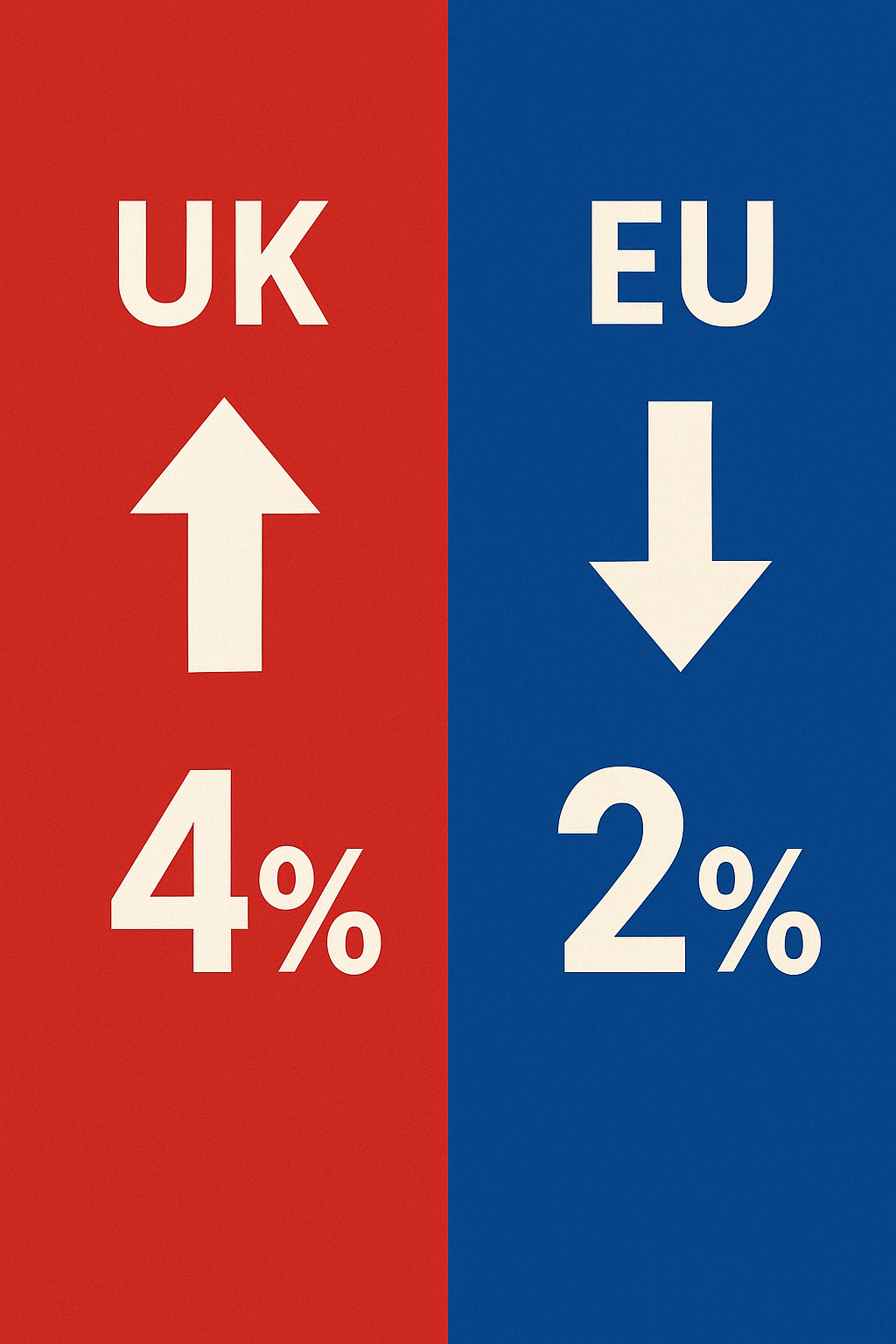
Currently, there is especially a huge divergence between the EU & UK on interest rates (2% v 4%), making the UK and its assets a more favourable place to hold money, which in-turn strengthens the Sterling.
The cost is to UK consumers and businesses, who have to pay more for goods/services and for loans of any kind. This is where jobs and the economy gets hurt, but this is not a concern just yet to policymakers.
As a services nation, we need people to spend money. If they are not, the economy goes down and jobs are lost.
Basically, if all things were equal, but the UK had interest rates down at 2%, we would probably see the £-€ rate at 1.11 right now. This means each time the market deems a UK rate cut is on the cards, £-€ will slide.
As the divergence between EU & UK rates gets less, investors will start putting their money elsewhere, which will devalue the £. |
|






 X
X Facebook
 linkedin