A Spain property search often begins with the idea of using a viewing trip to “get a feel” for several areas. That can work at the early research stage, but it becomes less useful once buyers are closer to making an offer. For non resident buyers working within the 90 day rule, every trip needs a purpose.
Viewing days, family discussions, legal review, deposit planning, and return visits can use more time than expected.
The mistake is not visiting Spain too early. The mistake is using valuable travel days without a clear decision plan.
This happens because buyers often treat property search time and travel time as separate things. They may plan a week in Spain around viewings, then realise they also need time for neighbourhood checks, second visits, legal questions, school or healthcare research, and conversations with family members.
A property can look right online, feel different in person, then require more checks before anyone feels ready. That is normal. Spain offers a wide range of locations and lifestyles, which is part of the appeal. But that choice can also stretch the decision process when the buyer has not decided what the trip is meant to achieve.
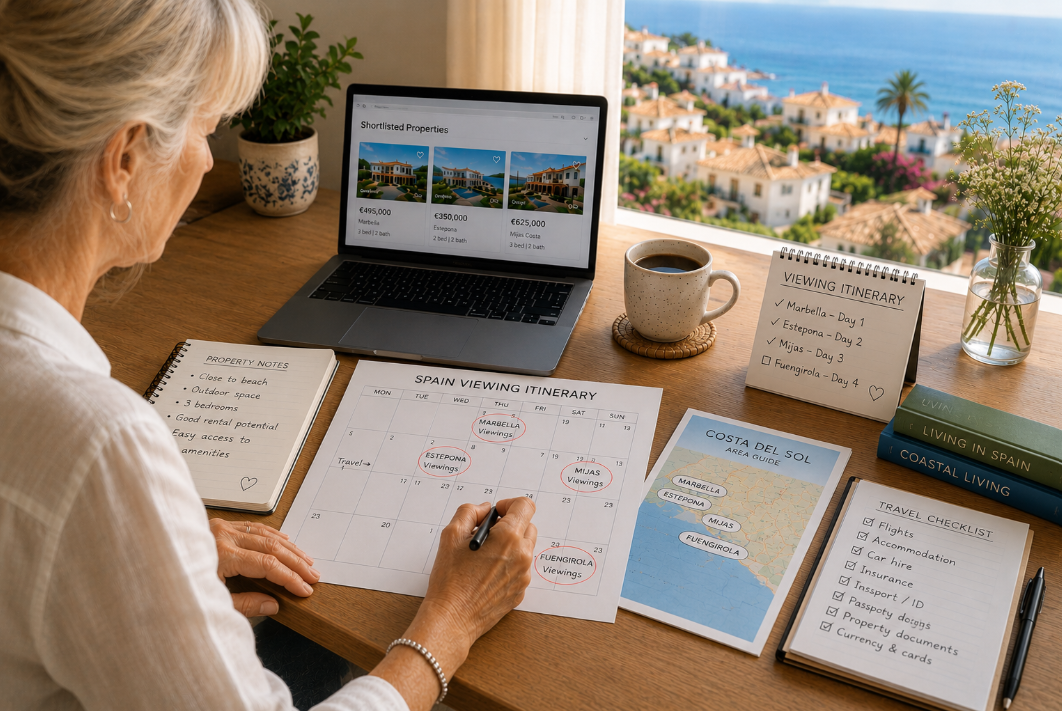
A stronger viewing plan starts before flights are booked. Buyers need to know if the trip is for research, shortlisting, offer readiness, or completion support. Each trip has a different structure. A research trip can include several areas and broad comparisons. A serious viewing trip should be tighter, with fewer properties and sharper questions.
A completion support trip may need space for practical tasks, setup decisions, and local appointments. A common buyer mistake is trying to make one trip do every job. That usually creates more pressure, not more clarity.
The timing impact becomes clear when the right property appears. A buyer may want to act, but the lawyer has not been instructed. The NIE plan is unclear. Proof of funds has not been prepared. A family member still needs to approve the area. Banking checks and deposit timing may also need attention before a reservation contract can move forward.
These are not unusual problems. They are common planning gaps. The real timing risk is finding a suitable property before the buyer is ready to proceed. In that situation, the issue is not the property market. It is the buyer’s process.
Buyers also need to think beyond the offer stage. The 90 day rule can affect second viewings, completion planning, renovation visits, furnishing, utility setup, and longer stays after purchase. Property ownership and stay rights are separate planning matters.
A buyer may own a home in Spain but still need to manage how long they can stay under the relevant rules. This is especially important for buyers who plan to use the property for extended seasonal stays, family visits, remote working periods, or gradual relocation planning.
The overlooked issue is not only the number of days allowed. It is how those days are used.
Before booking the next trip, buyers should build a simple viewing plan:
• Count previous Schengen days before choosing dates
• Decide the purpose of the trip before booking viewings
• Limit viewings to areas that match the current plan
• Ask an independent lawyer what to prepare before signing anything
• Start NIE planning before the purchase becomes urgent
• Leave space after viewings for family review and cost checks
A better Spain viewing trip is not always longer. It is more focused. Buyers who plan their time well can ask better questions, compare properties with less confusion, and move forward with more confidence when the right option appears.

 X
X Facebook
 linkedin