A Spain viewing trip can be well organised and still end without a purchase. Buyers may visit several suitable homes, take detailed notes, and spend time comparing areas, yet return without feeling that any property is the right fit. That result can feel disappointing when flights, accommodation, appointments, and time away from work have already been arranged. It may also create pressure to choose the best available option simply because the trip was meant to produce progress.
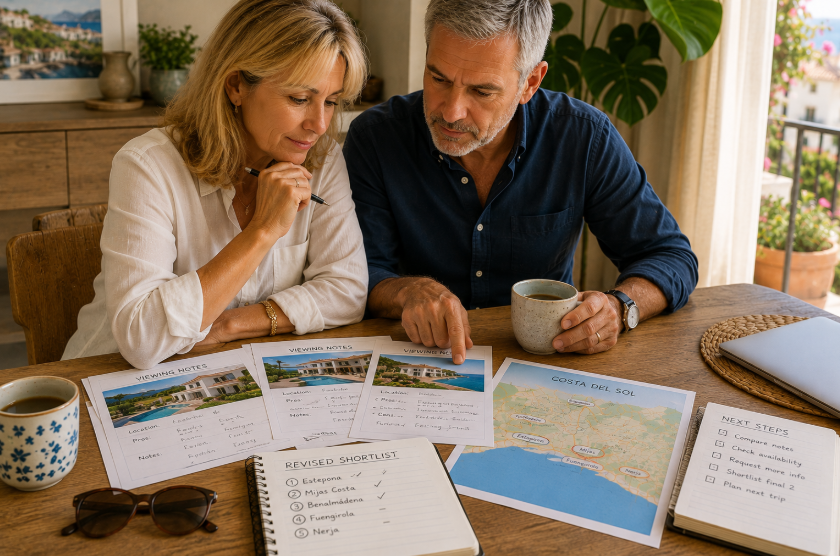
A viewing trip without an offer is not automatically an unsuccessful trip. It can reveal that the search criteria, location choice, budget, or expectations need refinement before the next property deserves serious consideration.
This usually happens because online research cannot answer every question. A floor plan may look generous until the rooms are viewed in person. A quiet area may feel too removed from services. A central apartment may bring more street activity than expected. A villa may offer the right space but require a level of upkeep that does not suit the planned use. Buyers may also find that the features they prioritised online are less important once they experience the property.
A common buyer behaviour is judging the trip by how many properties felt right rather than by how much clearer the decision became.
The value of the trip often sits in what the buyer can now remove from the search.
Several unsuccessful viewings can also expose a problem with the brief. The buyer may be asking one budget to cover too many priorities, such as sea views, walkability, outdoor space, rental potential, privacy, and low maintenance. Family members may value different outcomes. One person may prioritise access to restaurants, while another wants space and calm. The estate agent can send properties that match the written criteria, but the written criteria may not reflect the real decision.
When every property is close but none feels right, the problem may sit in the ranking of priorities rather than the available homes. Agents can support the search more effectively when buyers explain why each viewed property was removed.
Timing pressure can make the next stage less productive. Buyers may immediately book another trip, widen the search to several new regions, or request a larger volume of listings. That creates activity, but it does not always create progress.
A better next step is to review the first trip while the details are still clear. Which features consistently worked? Which concerns appeared more than once? Did the preferred area support the intended lifestyle? Was the full budget realistic once taxes, fees, maintenance, and possible work were considered? The timing risk is repeating the same viewing trip with a longer shortlist but no improved decision framework.
A short review period can save more time than another rushed round of appointments.
Buyers should also consider what “the right one” means in a real transaction. No property will meet every preference. The decision usually involves acceptable trade offs, but those trade offs should support the purpose of the purchase. A smaller home in a well connected area may work better for regular visits than a larger property requiring a car. A home farther from the coast may offer more space and year round services. A newer apartment may provide easier maintenance, while an older home may offer character with additional checks and future work. The aim is not to remove every compromise. It is to choose compromises that will still make sense after completion.
Before arranging more viewings, complete this post trip review:
• Remove properties that failed a true non negotiable
• Record one clear reason each property did not progress
• Identify three features that mattered more in person than online
• Recheck the budget against the locations and property types viewed
• Ask each decision maker to rank the top five priorities separately
• Give the agent a revised brief based on viewing feedback
Not finding the right property on the first trip can improve the search when the learning is used properly. Spain offers varied property types and locations, so a more precise brief can lead to stronger matches.
The next trip should not repeat the first one with different addresses. It should reflect what the buyers now know about their routines, priorities, trade offs, and actual response to each area.

 X
X Facebook
 linkedin