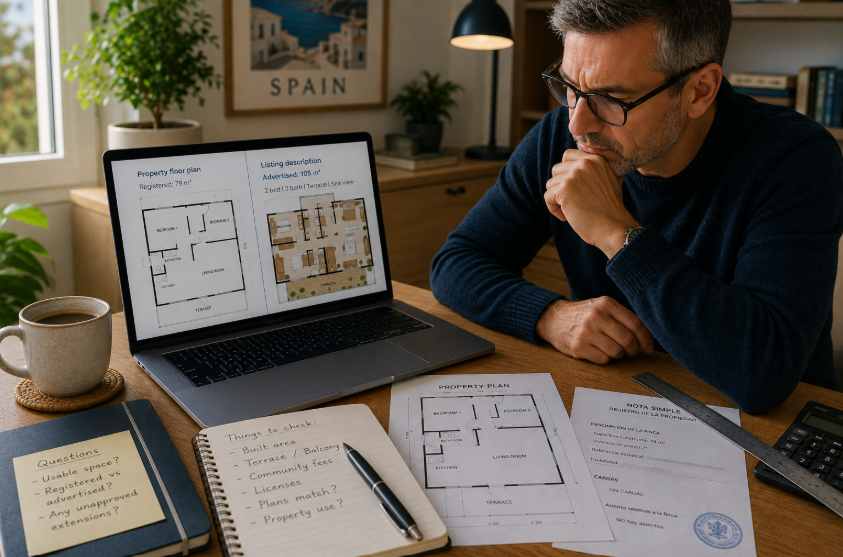
The listing describes a spacious Spanish home with an enclosed terrace, converted garage, additional bedroom, roof room, or extended kitchen. The extra space may be the main reason the property feels suitable. During the viewing, the layout appears complete and has possibly been in use for years. The problem starts when the legal documents describe a smaller property or omit part of the accommodation.
The property being sold and the property recorded on paper may not be identical.
This does not automatically prove that the alteration is unlawful, but it means the buyer cannot rely on the listing, photographs, or current use as confirmation that every area has been properly documented.
Overseas property buyers can miss this because the visible property feels more reliable than unfamiliar Spanish records. The additional room exists, the seller uses it, and neighbouring homes may have similar changes. Yet the missing space can affect legal review, valuation, mortgage approval, insurance, future renovation plans, tax records, and resale. The solution begins by comparing the marketed description with the registered description before the reservation becomes difficult to reverse.
The problem often develops because buyers treat floor area as one simple number. In practice, the listing, Land Registry information, Cadastre, valuation, building plans, and physical property may describe space differently. A Spanish nota simple can include the registered description, location, surface area, associated spaces, ownership, rights, and registered charges. It remains an informational document rather than a full physical inspection.
Cadastral information provides physical, economic, and mapped property data, while the cadastral reference identifies the specific property within the cadastral system. The buyer mistake is accepting the largest stated measurement without asking what that figure includes.
A terrace may be counted differently from internal living space. A garage may have been converted without its recorded use being updated. An extension may appear in cadastral data but not in the Land Registry, or the registered description may still reflect an older layout. The solution is to ask the independent lawyer and technical professional to compare all available descriptions and explain each difference in plain language.
A record difference becomes more serious when the additional area controls the purchase decision. A two bedroom property marketed as a three bedroom home may no longer meet the buyer’s needs if the third room cannot legally serve the intended purpose.
An enclosed terrace may affect community approval, external appearance rules, ventilation, drainage, or structural loading. A rural property may include a pool, storage building, guest accommodation, or boundary that does not match the documents supplied.
Visible use is not the same as confirmed legal status.
The Cadastre allows access to physical and mapped information, and the Property Registry can include the registered description and rights affecting the property. Spanish registry procedures also provide routes for correcting certain surface area differences, but the method depends on the size and nature of the discrepancy.
Rectification of the land area is different from adding neighbouring land or correcting the description of a building. The solution is to identify what type of mismatch exists before assuming that it can be corrected quickly. The seller may need to provide licences, technical certificates, community approvals, updated plans, or evidence of the age and status of the work.
The timing problem appears when the mismatch is found after the buyer has paid a reservation amount. The seller may say the difference is normal, the agent may explain that similar homes have made the same alteration, and the buyer may fear losing a property that took months to find. At that stage, a technical issue becomes a negotiation issue.
The buyer must decide if the seller will correct the records, provide missing evidence, adjust the price, accept a conditional contract, or proceed without resolving the difference.
The main timing risk is allowing the deposit schedule to move faster than the document comparison.
Official guidance from the Spanish Registrars recommends requesting registry information before paying money or signing a contract. That information can show the description, surface area, associated spaces, ownership, mortgages, attachments, easements, and other recorded matters affecting the home.
The solution is to make document consistency part of the pre reservation review. A short extension to the reservation deadline is usually more useful than relying on a verbal promise that the paperwork can be corrected later.
The overlooked consequence often appears during financing, renovation, insurance, or resale. A valuation may use a different floor area from the listing and reduce the amount a lender is prepared to consider. A future architect may find that the planned renovation depends on space that has not been properly recorded. An insurer may ask questions about construction type, use, or outbuildings after a claim. A later buyer may refuse to accept the same explanation that persuaded the current buyer to proceed.
An unresolved mismatch can become the buyer’s problem after completion. It may also change the true value of the property.
Paying for three usable bedrooms is different from paying for two registered bedrooms and one uncertain conversion. The same applies to a pool, guest house, roof terrace, basement, garage conversion, or extension. The solution is to value the property according to the space that can be supported by documents and professional advice.
Any additional area with unresolved status should be treated as a risk rather than automatically included at full value.
The practical solution is a record comparison before commitment. Ask the lawyer and technical adviser to identify the property you are legally buying, the property that physically exists, and any work needed to bring the two descriptions into line.
Before you reserve:
• Obtain a current nota simple
• Review cadastral data and the mapped property boundary
• Compare registered and advertised floor areas
• Ask for licences, plans, technical certificates, and community approvals
• Confirm the recorded use of garages, terraces, storage rooms, and extensions
• Put any required correction into the contract with a clear deadline
Do not ask only if the extra room exists. Ask if the records support the way you plan to use, finance, insure, renovate, and later sell it.

 X
X Facebook
 linkedin