The Property Tax Reality Overseas Buyers Face in Spain
|
|
Many overseas buyers arrive in Spain captivated by the dream of owning a sun-drenched coastal apartment or a charming inland villa. They focus heavily on purchase price, location, and lifestyle appeal — only to discover later that taxes significantly reshape the true cost of ownership.
What begins as excitement often shifts to concern once the full financial picture emerges: not just the one-time transfer taxes at completion, but recurring annual bills and future liabilities when selling. This disconnect between headline price and actual ownership costs is one of the most common reasons for budget recalibration and hesitation among international buyers.
Why Overseas Buyers Get Caught Off Guard
Spain’s tax system is complex and far less transparent than many buyers expect. While you’re evaluating sea views and property finishes, taxes are calculated using cadastral values, municipal regulations, and regional rules that vary significantly across the country.
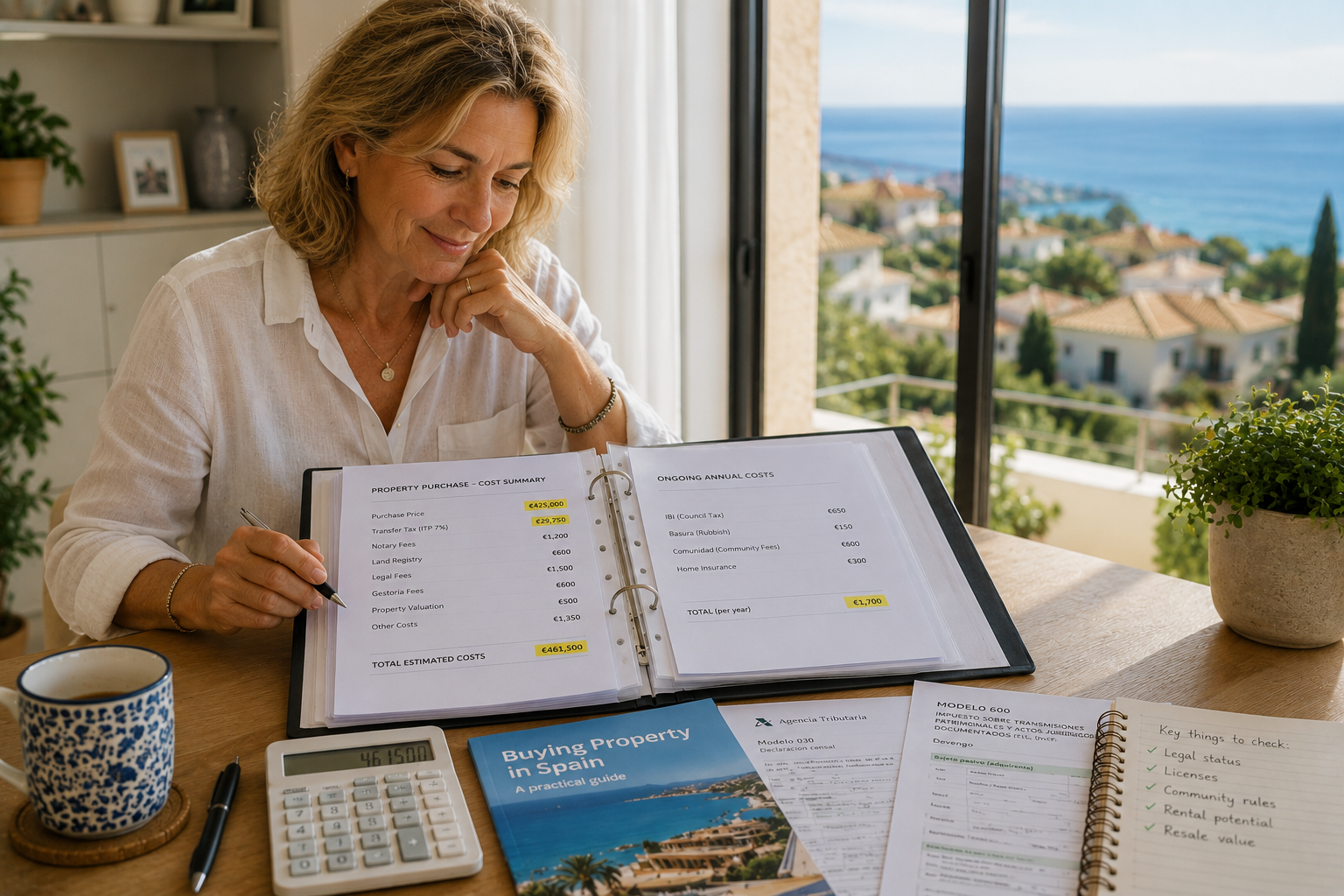
The buying process typically includes 8–14% in upfront costs, but these quickly fragment into multiple payments to different authorities. On top of that, annual municipal taxes and potential non-resident tax obligations add ongoing pressure.
The buying process typically includes 8–14% in upfront costs, but these quickly fragment into multiple payments to different authorities. On top of that, annual municipal taxes and potential non-resident tax obligations add ongoing pressure.
A major behavioral trap is relying on generic online averages or estate agent summaries. A buyer comparing properties in Andalusia, Valencia, or the Balearics may not realize how dramatically IBI rates, Transfer Tax (ITP), and Plusvalía calculations differ between regions — often leading to unpleasant surprises late in the process.
The Real Impact on Your Timeline and Finances
Failing to account for taxes early can:
- Delay notary completion due to insufficient funds
- Create immediate cash-flow pressure after purchase
- Complicate setting up utilities, community fees, and rental licensing
Even more critical is the long-term picture. Non-residents often face imputed income tax on unused properties, while selling triggers both capital gains tax and municipal Plusvalía (based on the increase in land value). Many buyers mistakenly assume Spanish tax rules mirror their home country’s system — a costly assumption.
What Overseas Buyers Usually Overlook
- Cadastral Value Trap: IBI (annual property tax) is based on the cadastral value — often only 30-50% of market value — not the price you actually paid.
- Regional Transfer Tax Variations: ITP on resale properties ranges from 6% to 13% depending on the autonomous community.
- Fiscal Representative Requirement: Non-residents must appoint a fiscal representative in Spain to handle annual tax filings.
- Plusvalía Municipal on Sale: A local tax calculated on the increase in land value, payable by the seller.
- Wealth Tax Exposure: Applies above certain asset thresholds for non-residents in some regions.
Practical Tax Awareness Framework – Protect Yourself Before Committing
To avoid nasty surprises, follow this proactive checklist:
- Request documents early: Ask for the latest IBI receipt and cadastral reference during initial viewings.
- Get a detailed tax breakdown: Have your independent lawyer provide a full projection covering acquisition taxes plus first-year recurring costs, tailored to the specific property and municipality.
- Budget realistically: Add 10–14% on top of the purchase price for all buying costs, then model realistic annual ownership expenses.
- Clarify your tax status: Determine your residency situation early — it dramatically affects income tax treatment, deductions, and reporting obligations.
- Build a strong cash buffer: Plan for 12–24 months of expenses, including taxes, maintenance, and unexpected costs.
Final Thought
Spain remains one of the most attractive property markets for international buyers — but only for those who move beyond the dream and fully understand the financial reality. By treating taxes as a core part of due diligence rather than an afterthought, you protect your investment and preserve the joy of ownership.
Savvy buyers don’t just buy a property in Spain — they buy it with eyes wide open.
|
|


 X
X Facebook
 linkedin