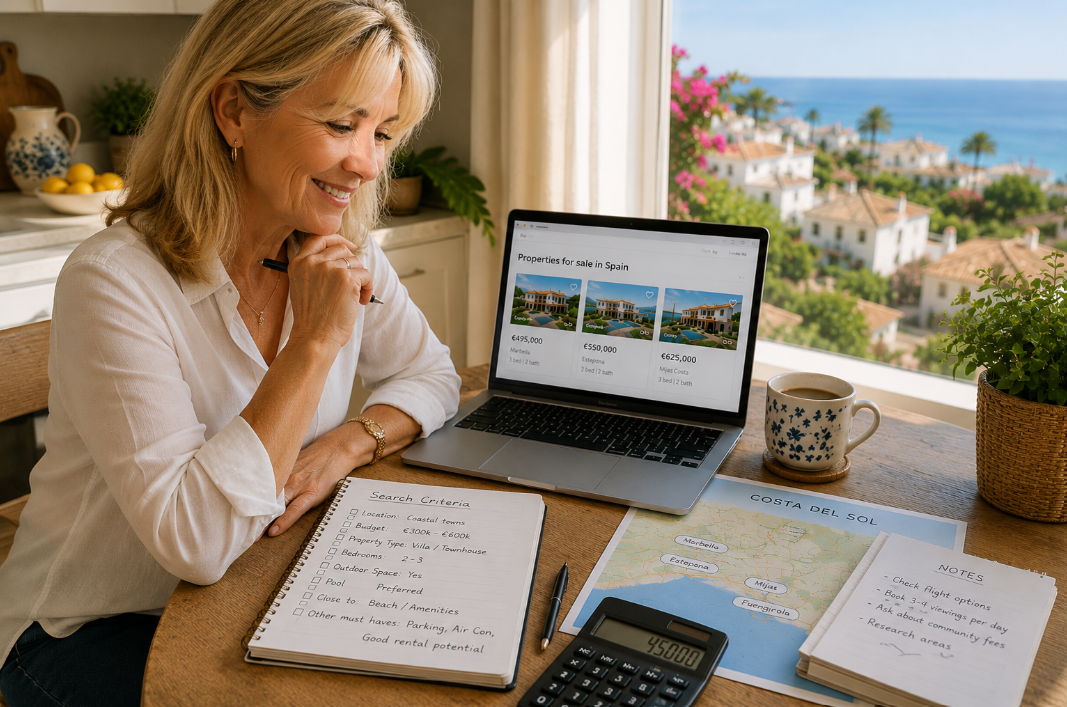
A Spain property search often begins with open tabs, saved homes, and a growing list of towns that all seem possible. That early stage can be useful, but it can also become too wide before the buyer has a clear plan. A city apartment, coastal home, inland villa, and rental focused property may all look appealing, but they may serve very different goals.
The first useful step is not saving more listings. It is defining what the property needs to do before the search becomes difficult to compare.
This happens because Spain gives buyers a wide range of strong options. That variety is part of the appeal. Some buyers are drawn to walkable towns, others want sea access, space for family, rental potential, or a slower pace of life. The challenge starts when all of those ideas sit inside one search without order. A home that works well for holidays may not suit seasonal stays. A property with rental appeal may not feel right for personal use. A quiet inland home may offer more space but need closer review around transport, local services, upkeep, and access.
A common buyer mistake is comparing properties before comparing how each location supports the planned use.
At the start, buyers also tend to place practical steps too far into the future. Legal support, NIE preparation, proof of funds, deposit timing, purchase costs, and banking checks may feel like later tasks. In real purchases, these steps often shape what a buyer can do once the right property appears.
A buyer may find a strong option, then realise they have not checked who will review the reservation contract, what documents are needed, or how quickly the deposit can be arranged. The process reality is simple: buyer readiness starts before the offer stage.
The timeline impact often appears during the first viewing trip. Without a clear brief, buyers may view too many homes across too many areas. By the end of the trip, details begin to blur. One property has the better terrace. Another has stronger access. Another feels easier for family visits. Another may offer better rental demand. If the buyer has not ranked what matters most, the trip creates more notes instead of clearer decisions.
The timing risk is using the first serious viewing trip to gather confusion rather than reduce it.
Buyers also overlook the gap between online appeal and real use. Photos rarely show parking patterns, street noise, hill access, community rules, public transport, heat management, or how the area feels outside peak periods. These details do not make a property wrong. They help decide fit.
For overseas buyers, fit matters because every return visit takes planning. A property that looks strong online still needs to be checked against daily routines, ownership costs, travel plans, and how often the buyer will realistically use it.
Before saving more listings, create a simple search brief:
• Define the purpose: personal use, rental income, seasonal stay, relocation, or mixed use
• Set a full budget that includes taxes, legal fees, setup, and ownership costs
• Choose no more than three priority areas to compare first
• List five non negotiables and five flexible preferences
• Speak with an independent lawyer before signing anything
• Ask what documents can be prepared before an offer
A strong Spain property search starts smaller than most buyers expect. It does not need every possible area or every attractive listing. It needs a clear purpose, a realistic budget, a prepared document path, and a way to compare homes against real use.
Once that structure is in place, agents can send better options, viewings become easier to judge, and the buyer can move with more clarity when a suitable property appears.

 X
X Facebook
 linkedin