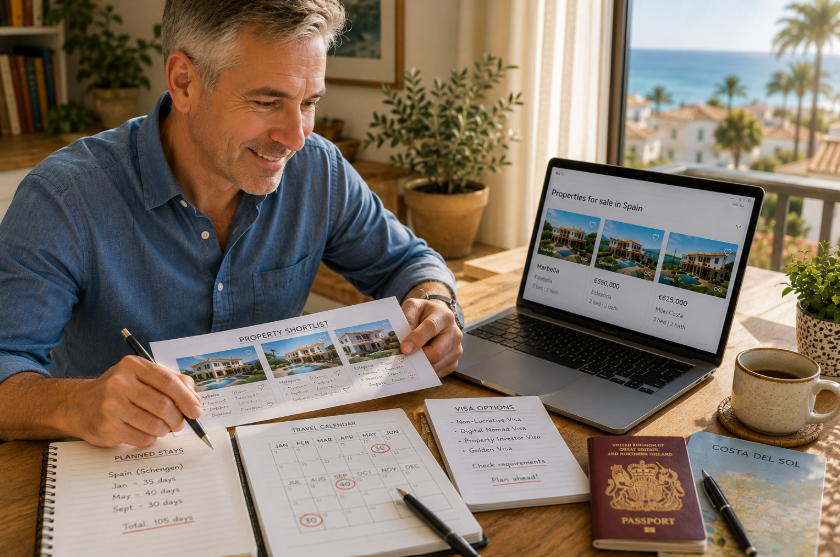
A Spain property search can lose momentum once the conversation moves from finding a home to working out how much time you can spend there. The property may still fit the budget. The preferred area may still feel right. Yet questions about Brexit, the 90 day rule, visas, healthcare, tax residence, and future travel can make the whole plan feel less certain. Some buyers respond by placing the search on hold before checking which rules apply to the life they actually want.
Brexit changed how British citizens plan longer stays in Spain, but it did not remove the ability to buy property, enjoy shorter visits, or apply through an appropriate residence route.
The useful first step is to separate the property decision from the immigration decision, then examine how the two need to work together.
The confusion often starts because several different questions become mixed into one. Can a British buyer own a Spanish property? Can they visit without a visa? Can they stay for several months? Can they work remotely while there? Does buying a home create residence rights? These questions do not share one answer. British citizens can still buy property in Spain, but ownership does not automatically create a right to live there permanently.
Short visits remain subject to the Schengen limit of up to 90 days in any rolling 180 day period. Those days apply across the Schengen area rather than restarting each time someone enters Spain. A common planning mistake is assuming that buying a property and gaining residence are part of the same legal process.
They are connected to the buyer’s plans, but they require separate checks.
The next question is not simply, “Can we still do this after Brexit?” It is, “How do we want to use the property?”
A buyer planning several shorter trips may be able to organise those stays within the 90 day rule. Someone hoping to live in Spain for most of the year will need to examine a suitable residence option before treating the purchase as a relocation plan. Spain currently has routes that may suit different circumstances.
The non lucrative residence visa is intended for people with sufficient means who plan to reside without working. The digital nomad visa may suit eligible people who work remotely for organisations or clients mainly outside Spain. Other routes exist for employment, self employment, study, and qualifying family circumstances.
The right visa follows the buyer’s intended lifestyle and work position. It does not follow the property price.
Timing also matters. Visa preparation can involve financial evidence, health insurance, criminal record certificates, translated or legalised documents, proof of employment or professional experience, and consular appointments, depending on the route. That work should not be left until a property is already reserved. At the same time, buyers do not always need to complete an entire visa application before conducting initial research or viewings. They need enough early advice to know whether their intended lifestyle appears workable.
The timing risk is not taking time to understand the rules. It is reserving a property around a stay plan that has never been checked. A property lawyer can advise on the purchase, while a qualified immigration adviser or Spanish consulate can clarify residence requirements. Buyers should know which professional is answering which question.
The 90 day rule can also look more limiting when it is discussed without a calendar. Ninety days in a rolling 180 day period does not mean one fixed three month visit each year. It can support different patterns of shorter stays, provided the total Schengen days remain within the permitted limit.
Buyers considering a holiday home may find that a planned calendar works well for them. Others may realise they need a residence route because they want longer seasonal stays or a permanent move. Neither conclusion means the property goal has failed. The important question is whether the intended stay pattern supports the dream behind the purchase.
A home for several well planned visits requires a different structure from a home intended for full time living, remote work, or retirement.
Before placing the search on hold, use this clarity check:
• Write down how many months you realistically want to spend in Spain
• Decide if you expect to work while physically based there
• Count travel across all Schengen countries, not Spain alone
• Check which residence routes may match your income and work position
• Confirm that property ownership does not itself create residence rights
• Speak with separate property and immigration professionals where needed
The goal is not to force the dream into a rule that does not fit. It is to shape the purchase around a plan that can work. Brexit added preparation for British buyers, but preparation is different from impossibility.
Once the stay pattern, visa route, budget, and property purpose are clearer, the search can restart on stronger terms.

 X
X Facebook
 linkedin